
The Complete Guide to Blending Balayage with Extensions
Be U Professional
Be U Professional
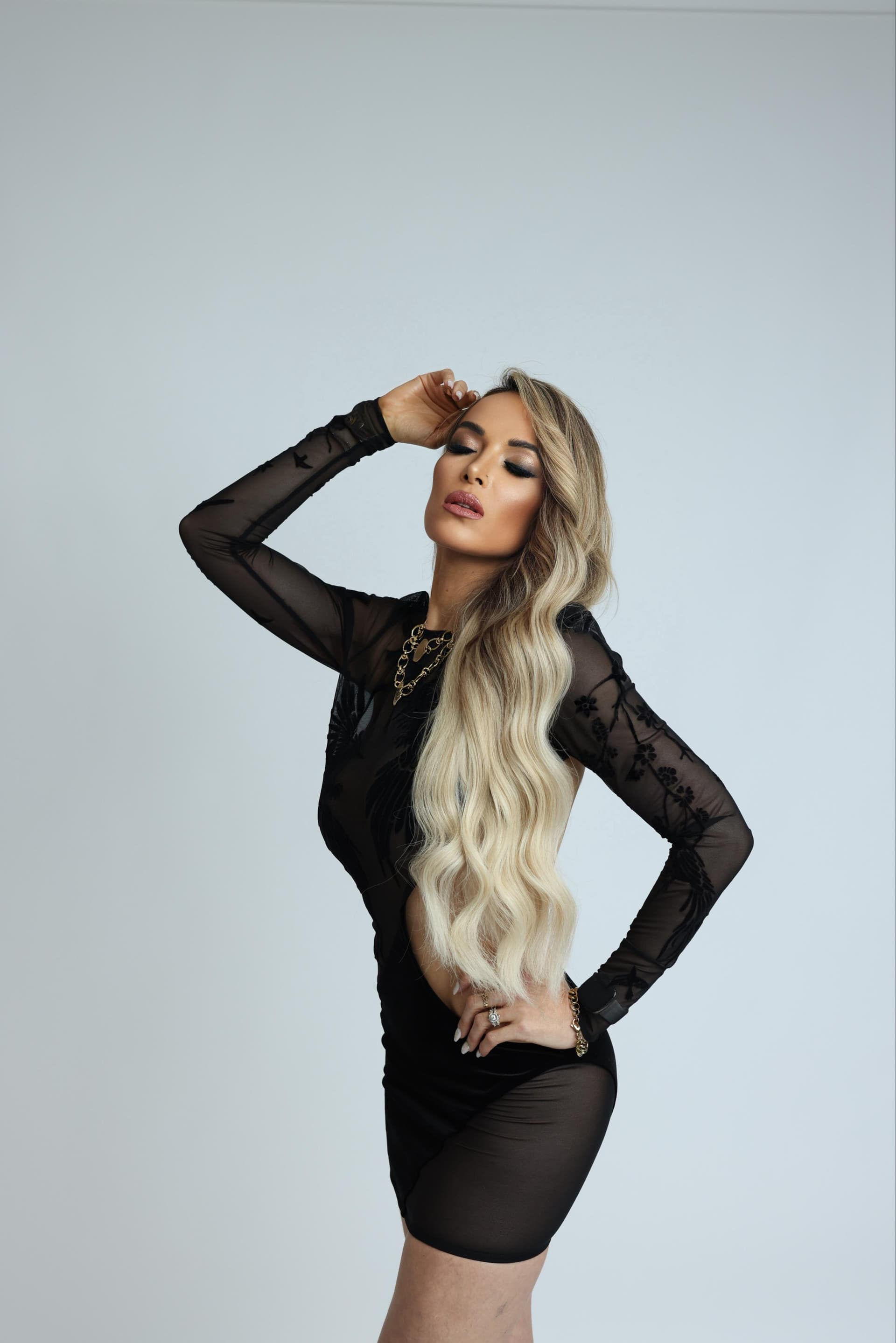
Matching solid-color extensions to single-process hair is straightforward. Matching them to a beautifully executed balayage - with root shadow, tonal dimension, soft ends - is an entirely different skill set. Done right, the result is seamless and stunning. Done wrong, the extensions look like a wig. This guide covers the complete technical approach: shade selection, placement strategy, panel blending, and toning.
Understand the Color Structure First
Before you select a single extension shade, map the client's color structure. A typical balayage head has three distinct zones: a deeper root (often level 4–6 or an intentional root shadow at level 3–4), a transitional mid-shaft where hand-painting begins (typically level 6–8), and brightened ends (level 8–10, often toned to beige, ash, or champagne). Each zone must factor into your extension color strategy. The most common mistake: color-matching only to the ends, which creates extensions that look correct at the tips but wrong at the attachment point.
The Multi-Shade Blending Technique
A single extension shade will never replicate the dimensional look of a lived-in balayage. The professional approach is to use 2–3 extension shades layered across different rows. A common formula for a warm balayage client at level 6–8 with toned ends: bottom row (closest to nape) uses the lightest dimensional shade to match the brightened ends; the middle row uses a mid-tone shade mirroring the transitional zone; top rows use the deeper shade to integrate with the natural shadow. When these rows blend together in a finished style, the dimension reads as entirely natural.
Shade Selection for Common Balayage Profiles
For balayage clients with cool, ashy toning, look for extension shades with neutral or cool undertones - avoid warm golds which will read as two different hair types. For clients with warm, honey balayage, dimensional shades with caramel or golden undertones blend beautifully. For rooted ombré clients (deep root, bright ends), use a darker extension shade in the upper rows and a lighter shade in the lower rows. Always pull extension strands against the client's actual hair in natural light - never rely on artificial salon lighting alone for color matching.
Panel Placement for Invisible Blending
Where you place the extensions matters as much as the color you select. For balayage clients, avoid dense uniform rows - instead, stagger the attachment points and vary panel widths to mirror the irregular, hand-painted nature of the balayage itself. On heavily highlighted clients, place lighter extension shades specifically under highlighted sections of natural hair so the extension color reinforces rather than contrasts with what's above it. This is particularly effective with tape-in extensions where precise placement control is highest.
Toning Extension Hair: The Rules
If the extension shade is close but not quite right, you have toning options - with critical limitations. You can apply a deposit-only semi-permanent or demi-permanent toner to extension hair to shift tone, add warmth, or neutralize brassiness. What you must never do is apply a lightener or bleach to extension hair that is already installed. Oxidative processes weaken the hair shaft structure and will cause breakage, frizz, and dramatically shortened lifespan. If a client wants extensions lightened to match a new, lighter balayage, the correct answer is to order replacement hair in the correct shade - not to lift the installed hair.
Root Shadow for Seamless Attachment
Even with perfect extension color selection, the attachment point can reveal itself if the root shadow isn't handled correctly. For weft and tape-in clients, applying a root shadow gloss or demi-permanent shade to the natural hair at and just above the attachment point after installation creates a visual depth that camouflages the transition. For K-Tip clients, a root smudge service at the color appointment immediately following installation dramatically improves the overall result.
What Not to Do
- Never match extensions to the client's root color alone - the attachment point will read darker than the rest of the hair
- Never bleach or lift installed extension hair - deposit-only tones only
- Never skip a natural-light color check - salon lighting distorts warmth and level
- Never use a single shade on a client with more than 3 levels of variation in their balayage
- Never ignore undertone - warm extensions on a cool balayage will look like a color mismatch regardless of level accuracy